
Service Industry Upheaval: Atlantic and Cape May Lawmakers Speak Out Against Bill Targeting Tipped-Wage Workers
April 10, 2025
A bill throwing New Jersey’s service industry into upheaval that was up for discussion in the Assembly State and Local Government Committee on Thursday drew sharp criticism from business owners, tipped workers, and Republican committee members Assemblywoman Claire Swift and Assemblyman Erik Simonsen.
“When I saw this bill, I said, ‘How much more can they destroy the restaurant businesses?’ Our congressional district has the most establishments and the most employees in all of New Jersey,” Swift (R-Atlantic) said following a round of applause to her vocal opposition of the measure (A5433).

WATCH: Swift Defends South Jersey Restaurants & Workers
Currently, a tipped worker’s gratuities for the day and the $5.62 an hour from the business must equal the state’s minimum wage of $15.49, otherwise the employer needs to pay more an hour to make up the difference. The Democrat-sponsored bill under debate would require the employer to pay tipped workers a base minimum wage of $15.49 an hour regardless of much they make in tips.
“As someone who grew up in the industry and worked through high school and paid my way through college, I’ve seen how careers are made,” Simonsen (R-Cape May) said.
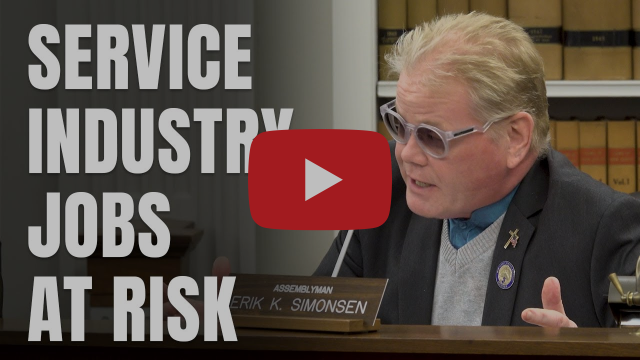
WATCH: Simonsen: “We’re Not California — Let’s Keep New Jersey Working”
Those who showed up to testify against the bill in Trenton stressed how the bill would increase labor costs for employers and lower opportunities for service workers. One restaurant owner said after significant layoffs, he would eventually need to close and look into other development opportunities. Tipped workers argued they make more than their salaried counterparts and never asked for this legislation.
“I can’t wrap my head around this bill. But, there’s some real simple math for you and that’s the fact that there’s seven states that do it, which means there’s 43 states that don’t. That tells me what I need to know. We’re New Jersey and let’s keep it that way,” Simonsen added.
Testimony highlighted how the measure would disproportionately impact areas of the state that rely heavily on the hospitality and tourism industries, including Atlantic City and other shore points; however, the economic consequences would be felt throughout New Jersey.
“The timing of this bill is horrible. The price of gas is up. The price of food is up. Payroll taxes have increased. Our tourism season begins next week. We’re going to do everything we can to oppose this bill,” Swift said.

